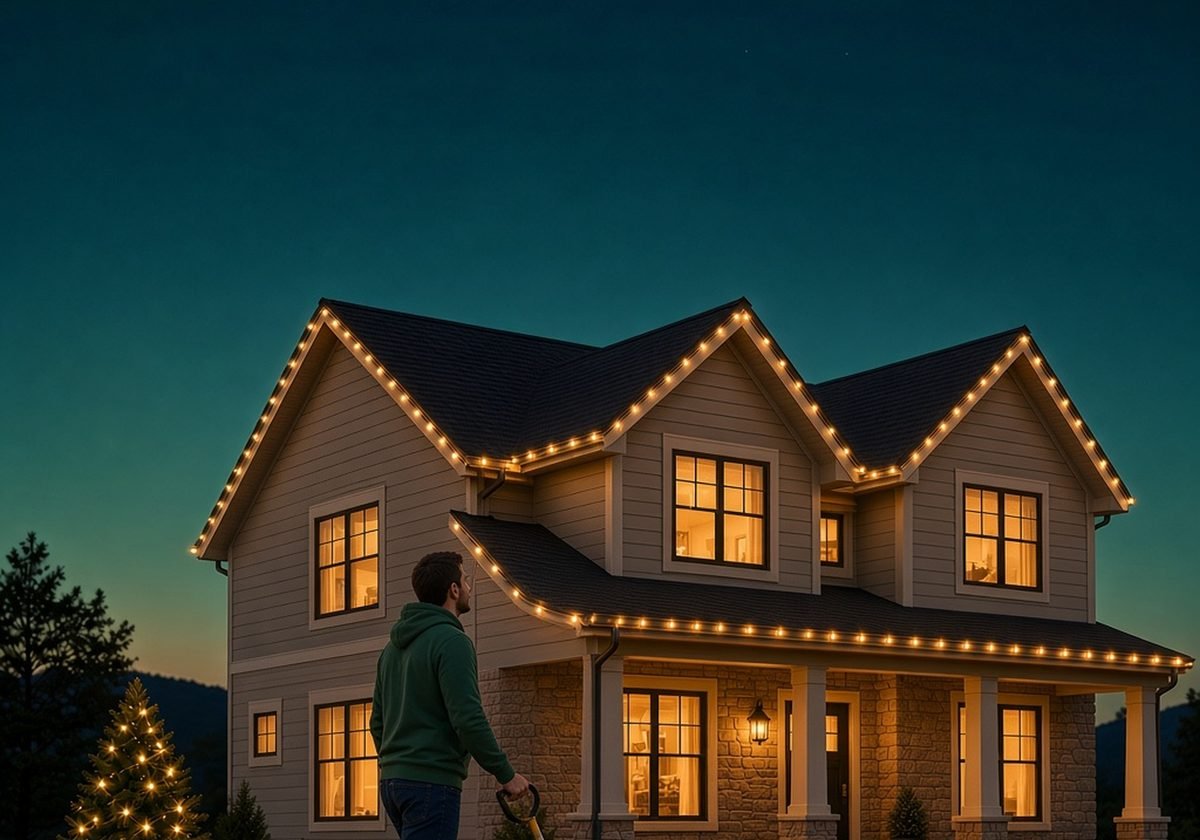
The actual work
Selling and quoting
Measuring rooflines, quoting each house, and explaining lease versus customer-buys options.
Installing
Ladder and roof work to hang lights, clips and timers, and checking outlets and power.
Takedown and storage
Taking lights down after the season, labelling them by house and storing them for next year.
Scheduling a short season
Fitting every install into a few busy weeks, often around another job or business.
Who might enjoy it
- You already run a home-service business (lawn care, power washing, roofing, handyman) and want winter work.
- You're comfortable on ladders and willing to follow fall-protection rules.
- You like visible, satisfying results and talking with homeowners.
- You can handle an intense few weeks rather than a steady year-round routine.
Buyer fit from our research dossier on this business.

How customers are found
Close to home first
Your own street and neighbours, and customers you already serve in another trade.
Around every install
Door hangers on nearby houses, and before-and-after photos posted online.
Ads and local listings
Paid social ads and local service listings are common channels. Results vary.
Signs, carefully
Yard and roadside signs are used, but sign rules vary. Texas, for example, has right-of-way sign penalties. Check yours.
Timing
One operator interviewed on an industry podcast describes early-booking offers in summer ("Christmas in July"), marketing again in late September or early October, and demand switching on after Halloween. This is one operator's experience, not a rule; your timing depends on your area.
Renewals and referrals
Happy customers who rebook next season, and their neighbours.
Startup cost categories
Categories only. Material prices change, so the Pricing Kit has you enter your own supplier's numbers.
| Category | What it covers |
|---|---|
| Business setup | Entity, and any license or registration your state or city requires. |
| Liability insurance | Coverage for working on customers' homes. Confirm it before the first climb. |
| Ladders and roof safety gear | Ladders of the right length and fall-protection equipment. |
| Lighting material | Wire, bulbs, clips, plugs and timers, if you supply them. |
| Storage | Space to store lights by house between seasons. |
| Marketing | Door hangers, signs, ads and photos. |
| Training (optional) | Safety or installation training. |
Operating demands and safety
Falls are the big risk
In a CPSC release, about 14,700 people were treated in emergency rooms for holiday-decorating injuries in one season, and falls were the most common (41%). This is 2017 data.
Source: U.S. Consumer Product Safety Commission, News Release 18-054 (Dec 6, 2017).
Ladder and fall-protection rules
For employers, OSHA requires portable ladders to extend at least 3 feet above the landing, and fall protection at 4 feet or more, with a fall-protection plan option for residential roofs. OSHA lists holiday light installation in its falls emphasis program.
Source: OSHA 29 CFR 1910.23(c)(11), 1926.1053(b)(1), 1910.28(b)(1); OSHA CPL 03-00-025 §II.B.4.
Electrical safety
Use lights tested by a recognized lab and rated for outdoor use, plug into GFCI-protected outlets, and inspect cords.
Source: CPSC, News Release 18-054.
A compressed season
Installs bunch into late October through early December, with takedown in January. Weather can push your schedule.
First steps you can take
- Check your insurance. Ask what it covers for ladder and roof work on homes.
- Read the fall-protection basics. Decide how you'll work safely at height.
- Price one house on paper. Measure a roofline you know and work out what you'd charge.
- Decide lease or customer-buys. Who owns the lights affects your price and storage.
- Check local sign rules. Before any yard or roadside signs go out.
Holiday Lighting Pricing & Profit Kit
A pricing and planning toolkit: quote a house, compare lease versus customer-buys, plan your season and work through safety, insurance and agreement checklists. It is not a complete launch kit.
Examples are fictional; business results vary. This page is educational and isn't legal, insurance or safety advice.